

.jpg)
Food tracking has long been a habit people adopt to improve their health. With the rise of GLP-1 medications and curiosity around protein and fiber intake, tracking has become even more common.
Food logging can clarify the connection between nutrition and health, such as how different foods you eat affect blood glucose levels. It’s also a good tool for those looking for accountability and behavior change.
However, food-tracking apps aren’t perfect and can also have negative aspects, such as an obsession with food intake and the pressure to meet nutrition goals set by the apps.
Read on to learn more about the pros and cons of food tracking, as well as which dietitian-recommended food logging apps are available.
4 Food Logging Apps: Pros, Cons, and Best Use Cases
People use food logging apps for a variety of reasons, from weight loss to accountability when working with a dietitian. By tracking food intake, people hope to lose or gain weight, better understand the role of nutrients in health, identify food triggers, and build healthier eating habits.
With so many nutrition apps out there, you might be wondering which ones are best. Here are four food tracking apps recommended by a registered dietitian.
1. Cronometer
This is a user-friendly option for macro tracking. Even on the free version, you can use a barcode scanner, making it easy to add what you eat using the app’s food database. In addition to being able to track calories and macronutrients, Cronometer keeps track of up to 84 micronutrients so you can see where you’re meeting needs and where you might fall short.
Cons of Cronometer include several premium features being unavailable on the free version. Gold, which is the paid version, has features such as the recipe importer, photo logging, and timestamps.
2. AteMate Food Journal
This food diary is described as a “reflective health journal.” It’s great for people looking to develop healthy habits beyond nutrition.
While adding your food intake allows you to break down nutrients, the tool also asks questions such as why you ate. This brings about habit awareness beyond food, as you can track water intake, movement, and sleep as well.
AteMate offers a seven-day free trial, and after that, the price is $50 per year.
3. MyNetDiary
A great option for people who are new to nutrition tracking, MyNetDiary helps you find the eating pattern that makes sense for you. From calorie tracking to vegetarian to fiber-focused, there are several options to choose from. Users also set their own goals and can track food intake, exercise, and nutrients using the barcode scanner.
A con of MyNetDiary is that certain features, such as registered dietitian-created recipes, the ability to track 108 vitamins and minerals, and fitness tracker sync (with tools such as Apple Watch or Fitbit), are only available with the Premium subscription.
4. mySymptoms
This food tracker is designed for people who have reactions to food caused by conditions such as Irritable Bowel Syndrome (IBS), Inflammatory Bowel Disease (IBD) or migraines. It allows you to track food intake and symptoms to share with your medical provider. You can also log sleep, energy, and bowel movements to get a better picture of your overall health.
mySymptoms is free for seven days. After that, you can choose to be billed monthly, semi-annually, or yearly.
The Real Benefits of Food Tracking
.png)
Food tracking can feel like a simple habit: open an app, log a meal, move on. But when done thoughtfully, it becomes something more powerful: a feedback loop. Instead of guessing why your energy dips at 3 p.m. or why progress has stalled, you start to see patterns. And patterns create clarity.
At its core, food tracking increases awareness. When you consistently log what you eat, you’re more likely to notice hidden sources of added sugar, sodium, or excess calories. You may realize your “healthy” lunch is lower in protein than you thought, or that your fiber intake consistently falls short. That awareness makes it easier to shift from reactive eating to intentional eating.
Tracking also highlights nutritional gaps. Maybe you’re consistently low in potassium. Maybe your fiber intake averages 15 grams when your goal is closer to 25–30 grams per day. Once you see the pattern, the solution becomes practical: add a serving of fruit to lunch, toss chia seeds into breakfast, and swap white rice for quinoa. Small adjustments compound over time.
For those pursuing specific goals, whether weight loss, metabolic health, or maintaining adequate nutrition while taking a GLP-1 medication, having centralized data matters. Seeing calories, protein, carbs, and trends in one place reduces guesswork and supports consistency. Visual dashboards make progress tangible instead of abstract.
But traditional logging only tells part of the story.
Where Nutrition Apps Fall Short
Food logging isn’t a perfect science. It requires time, consistency, and a bit of patience. Searching for foods, estimating portions, and entering custom recipes can feel tedious. Even with careful logging, there’s room for error: serving size miscalculations, forgotten snacks, and database inaccuracies all add up.
There’s also a psychological component. For some people, tracking can shift from awareness to obsession. Research suggests a relationship between food tracking and disordered eating behaviors, though it’s not clear whether tracking causes those behaviors or simply attracts people already prone to them. Either way, if logging becomes stressful or punitive, it ceases to serve its purpose.
Another limitation: traditional apps show what you ate, but not how your body responded.
Two people can eat the exact same meal and experience very different glucose responses. Without biological feedback, you’re left guessing whether your choices truly support your metabolic health.
A Smarter Way to Log: Pairing Food Tracking with Metabolic Feedback
.png)
This is where Signos elevates the experience.
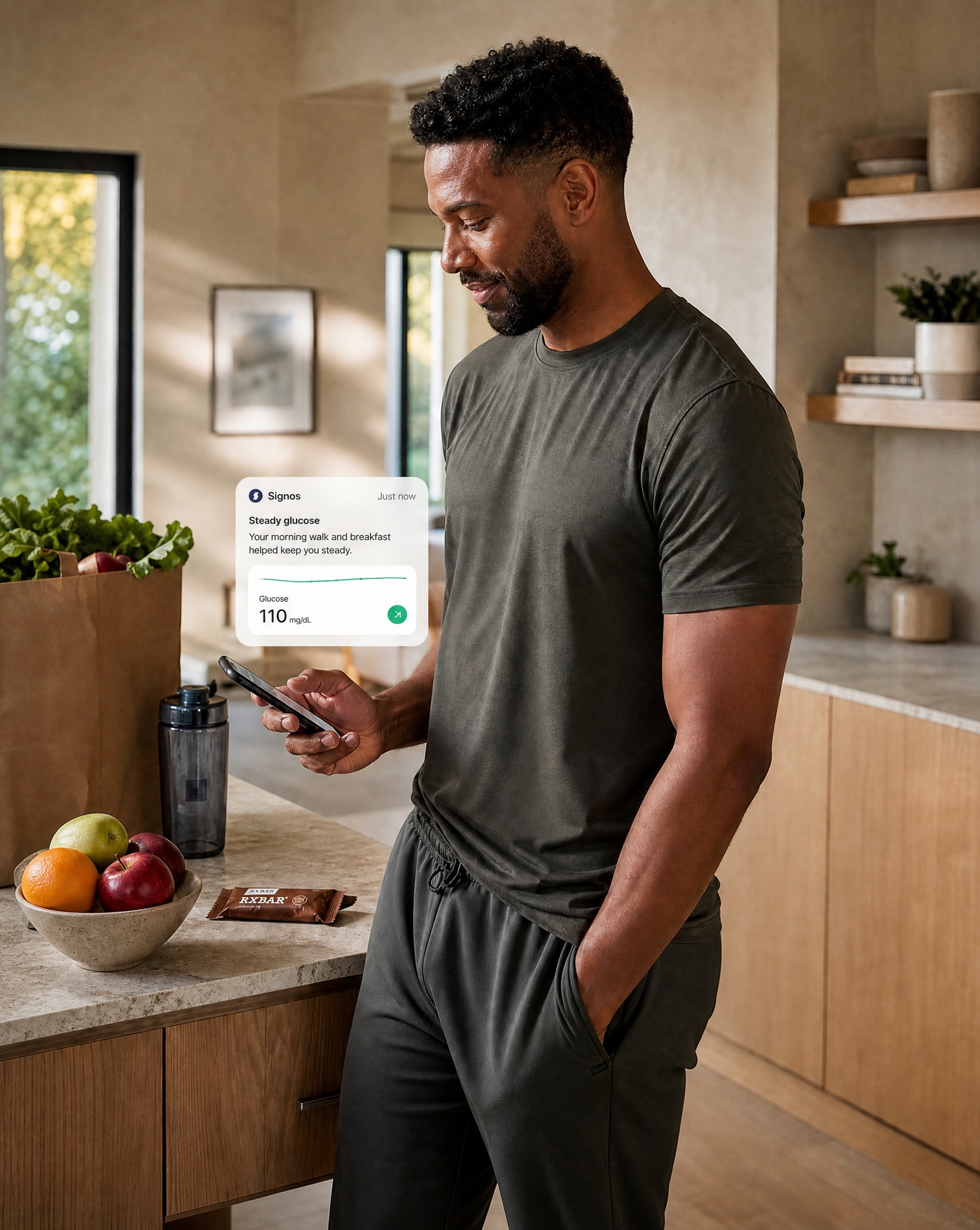
Inside the Signos app, food logging isn’t just about calories or macros; it’s paired with continuous glucose data to show how your body responds in real time. You can log meals by typing, voice entry, or photo logging, making consistency easier and less time-intensive.
Instead of only seeing that you ate oatmeal, you see what happened next.
Did your glucose remain in the purple optimal zone? Did it spike into yellow or pink and stay elevated? That context turns food logging into a metabolic experiment.
Signos encourages structured self-experimentation:
- What happens if you add protein or healthy fat to that carb-heavy breakfast?
- Does a 10-minute walk after dinner reduce your glucose spike?
- Do you feel less fatigued when you swap refined carbs for higher-fiber options?
You’re not just recording food; you’re testing hypotheses about your body.
The app’s Weekly Insights Reports surface patterns you might miss on your own. Maybe late-night snacking consistently increases your glucose variability. Maybe your post-workout meals create smoother curves than sedentary lunches. Over time, you accumulate data that helps you build habits based on evidence, not trends.
For individuals using GLP-1 medications, this layered feedback is especially useful. Appetite may be lower, but adequate protein and fiber remain essential. Pairing food logs with glucose data ensures you’re not just eating less; you’re eating strategically.
Smarter Logging Strategies (Without the Burnout)
.png)
To make tracking sustainable:
- Start with a clear purpose. Are you aiming to increase protein? Improve energy stability? Reduce glucose spikes? A defined goal keeps logging from feeling busy.
- Use tools that reduce friction. Voice logging or photo logging lowers the barrier to entry.
- Think in experiments, not perfection. Instead of asking, “Did I log this perfectly?” ask, “What did I learn?”
- Monitor your mindset. Tracking should build awareness, not guilt. If you notice stress creeping in, take a break or zoom out to pattern-level insights instead of daily micromanagement.
When food logging becomes a neutral data-gathering tool rather than a moral scoreboard, it’s far more sustainable.
The Bottom Line
Food tracking can be incredibly valuable, but only when it serves you. Traditional apps provide awareness around calories and nutrients, which is a powerful first step. Pairing that data with real-time metabolic feedback takes it further, turning tracking into a personalized learning system.
If logging increases stress or rigidity, step back. If it builds insight and supports your goals, lean in, especially when combined with tools like Signos that help you connect what you eat to how your body responds.
Ultimately, the goal isn’t to track forever. It’s to learn enough about your patterns that intentional eating becomes second nature.
Learn More With Signos’ Expert Advice
Signos can help you on your wellness journey by combining support from registered dietitians with blood glucose tracking. Learn more about the role glucose plays in health on Signos’ blog.
Topics discussed in this article:
References
1. Sabina, T., & Geshica, L. (2025, August 8). Perfectionism and eating disorder tendencies in calorie-tracking app users. Jurnal Psikologi, 52,

.svg)






.png)