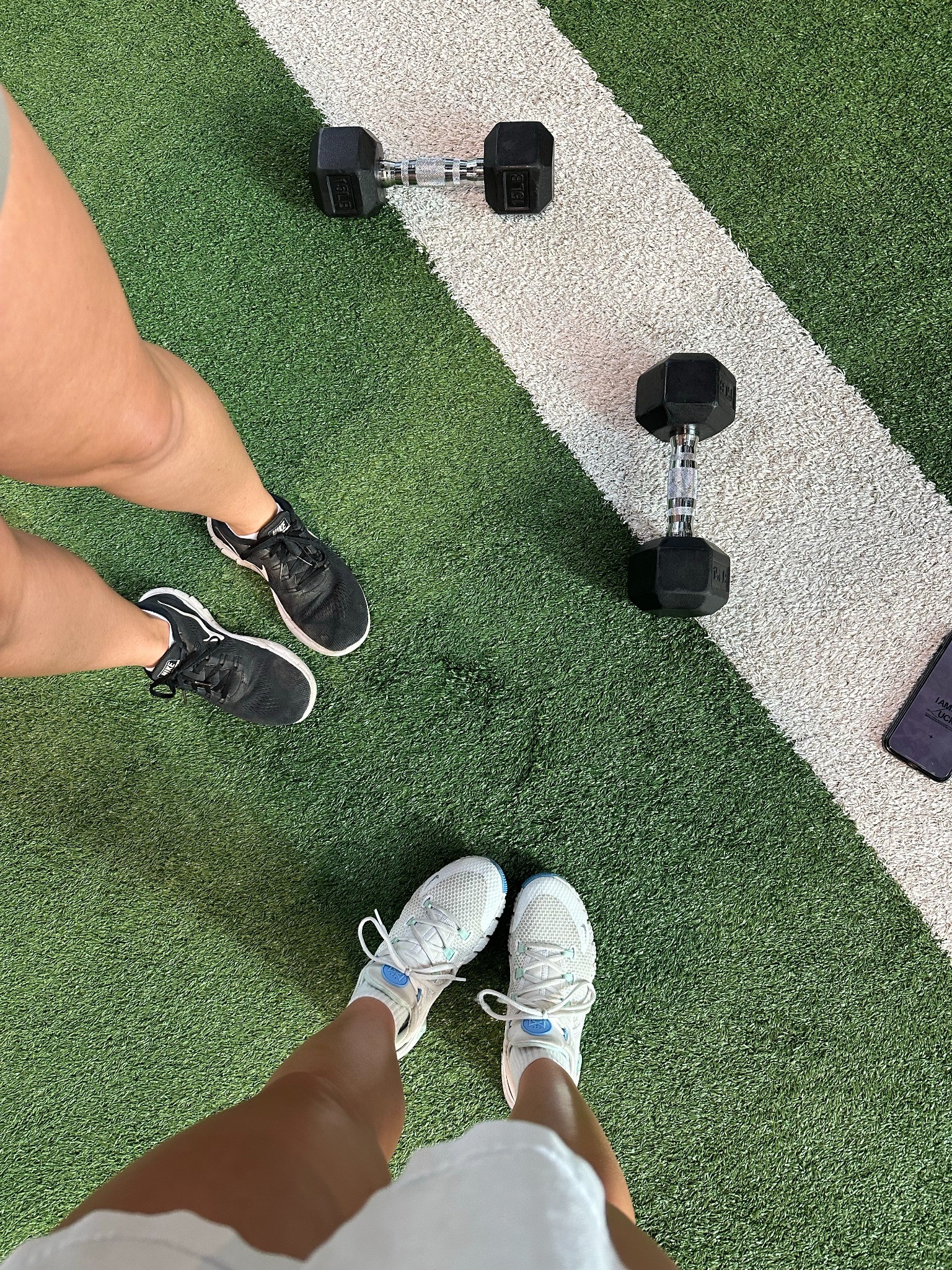
A man and a woman start trying to lose weight at the same time. Same dietary changes, same activity increase, same consistency. A few weeks later, his scale is moving faster. Hers barely seems to budge.
It's a frustrating enough pattern that it has become almost a cliché. But is that actually what the science shows? The answer is more nuanced than most people expect, and in some cases, it's not what you'd predict.
Do Men Lose Weight Faster Than Women?
On average, men may lose weight faster than women in some interventions, particularly early on. But that doesn't mean women are biologically less capable of achieving comparable long-term fat loss.
Observed differences often reflect overlapping factors: men tend to have larger bodies, more lean mass, and higher total daily energy expenditure. Comparing pounds lost also obscures a lot. A 220-pound man losing 10% drops 22 pounds. A 150-pound woman losing the same 10% drops 15 pounds. The scale makes the man's loss look dramatically larger when both lose the same proportion of their starting weight.
The picture becomes more interesting when you look at GLP-1 medications specifically. A 2024 study of 1,039 patients at the Mayo Clinic found that women achieved significantly greater total body weight loss percentage than men after 15 months of tirzepatide treatment, 15.1% versus 10.7%.¹ Men may have an average advantage in how quickly pounds come off in lifestyle interventions, but that is not the same as saying women cannot lose weight as effectively.
Why Do Men Often Lose Weight Faster Than Women?
The biggest contributor isn't a "faster metabolism" in the way most people mean it. Men typically begin with larger bodies, more lean mass, larger organs, and greater skeletal muscle, all of which contribute to higher total daily energy expenditure. When someone with a 2,700-calorie daily energy requirement creates a calorie deficit, the absolute deficit is larger than when someone with a 1,900-calorie requirement makes the same percentage cut. That translates into faster scale movement.
Notably, a 2025 study in the Journal of the International Society of Sports Nutrition found no statistically significant difference in the time it took men and women to lose 5% of body weight when protein intake was standardized at 1.6g per kilogram of body weight.² The practical implication: protein intake and calorie deficit matter more than sex when conditions are equalized.
How Do Muscle Mass and Metabolism Affect Weight Loss in Women vs. Men?
Muscle requires energy to maintain, so more lean mass means higher resting energy expenditure. But muscle matters beyond calories. Skeletal muscle is one of the body's primary sites for glucose disposal after eating, which means more muscle supports better insulin sensitivity and blood sugar stability.
For women, trying to lose weight through aggressive calorie restriction while ignoring muscle can work against long-term outcomes. If weight loss includes significant lean-mass loss, body weight drops but so does strength, glucose-disposal capacity, and resting metabolic rate. A 2024 systematic review and meta-analysis of 47 randomized controlled trials in Clinical Nutrition ESPEN found that higher protein intake significantly prevented muscle mass decline during weight loss in adults with overweight and obesity.³
For women, protecting and building muscle is one of the most powerful levers for improving body composition and metabolic health during weight loss.
How Do Hormones Affect Weight Loss in Women?
Female hormones influence weight regulation in real and measurable ways without being a catch-all explanation for every plateau.
Estrogen plays a key role in fat distribution, insulin sensitivity, and appetite regulation. Before menopause, estrogen promotes fat storage subcutaneously (hips, thighs, buttocks) rather than viscerally (around the organs), and enhances insulin sensitivity (ie, helps your body use glucose for fuel more effectively). Progesterone rises after ovulation and may increase appetite and energy expenditure, while altering how the body handles carbohydrates due to a decline in insulin sensitivity, particularly in the luteal phase.
Fat loss can also be harder to see on the scale during certain phases of the menstrual cycle.. Hormonal shifts temporarily alter water retention, sodium balance, and glycogen storage, creating scale changes of several pounds within a single week that have nothing to do with body fat. Someone can be successfully losing fat while the scale barely moves or temporarily increases.
Female hormones don't make fat loss impossible, but they do change appetite, glucose regulation, fluid balance, and what progress looks like week to week. This is why comparing daily and weekly scale numbers can be genuinely misleading, and why tracking a longer-term trend or using body composition data gives a much more accurate picture of what's actually happening. Try tracking your body composition, waist circumference, and how your clothes are fitting every 3-4 weeks instead of relying on the scale week by week.
Why Is It Harder to Lose Weight During Perimenopause and Menopause?
As estrogen declines during the menopause transition, body composition shifts in ways that make weight management more challenging. A 2021 study in Scientific Reports found that postmenopausal women had approximately 18% more visceral fat than premenopausal women for a given total fat mass, alongside lower estimated insulin sensitivity.⁴ The scale may look similar while the metabolic picture underneath has changed significantly.
This matters because visceral fat (stored around internal organs) carries more cardiometabolic risk than subcutaneous fat. Menopause also doesn't happen independently of aging. For women going through the transition, aging-related muscle loss and hormonal changes can compound simultaneously.
Disrupted sleep, which is extremely common during this transition, compounds the picture further: poor sleep independently raises hunger hormones, reduces insulin sensitivity, and makes body composition harder to maintain, often at the exact moment when other hormonal changes are already working against you.
The most useful shift for women in this transition isn't eating less and exercising more. It's changing what you're optimizing for: less focus on the scale, more focus on building and retaining muscle, prioritizing sleep as a metabolic lever, and tracking body composition alongside weight so you can see what's actually changing, not just what a number says.
Does PCOS Make It Harder to Lose Weight?
For women with polycystic ovary syndrome (PCOS), which affects 10-15% of women of reproductive age, weight loss has an additional biological layer that standard advice often misses.⁵
PCOS creates insulin resistance, meaning the body's cells don't respond normally to insulin's signal to absorb glucose from the bloodstream. The pancreas compensates by producing more insulin, and that excess insulin then signals the ovaries to produce more androgens (male-type hormones like testosterone), which promotes abdominal fat storage and worsens insulin resistance further. This cycle is intrinsic to the condition: research indicates that up to 75% of lean women with PCOS have insulin resistance, rising to as high as 95% in those with obesity.⁵ The practical result is that the same calorie deficit that produces consistent weight loss in a woman without PCOS may produce slower or less predictable results in a woman with it.
The encouraging part: even a small 5-10% reduction in body weight in overweight or obese women with PCOS has been shown to improve insulin sensitivity, reduce androgens, and restore regular menstrual cycles. GLP-1 medications are also showing early promise, with a 2025 review in Current Obesity Reports finding new evidence they can improve weight, insulin sensitivity, and menstrual regularity in women with PCOS, though larger trials are still needed.⁵
Resistance training, adequate protein, and tracking body composition and glucose patterns tend to give a more complete, honest picture of progress than scale weight alone in this population especially.
Do Women and Men Store and Lose Body Fat Differently?
Before menopause, women tend to store fat subcutaneously around the hips and thighs. Men tend to accumulate fat centrally and viscerally. After menopause, women's distribution shifts toward a more central, visceral pattern.
The body determines where fat comes off first, and spot reduction doesn't work. Two people can lose the same number of pounds but lose very different proportions of fat, lean mass, visceral fat, and water. The scale number alone tells you almost nothing about the quality of the weight loss.
How Can Women Lose Weight More Effectively?
Prioritize fat loss, not just weight loss. Useful markers beyond the scale include waist circumference, strength, body composition, energy, and glucose patterns.
Build and protect muscle. Progressive resistance training should be a centerpiece, not an accessory. It supports glucose disposal, insulin sensitivity, and long-term body composition in ways cardio alone cannot.
Eat enough protein. Higher protein intakes (around 1.2 to 1.6g per kilogram of body weight daily) have been shown to preserve lean mass during weight loss.³ Distribute protein meaningfully across meals rather than concentrating it at dinner.
Avoid unnecessarily aggressive calorie deficits. Extreme restriction makes it harder to train, preserve muscle, manage hunger, and sustain the plan long enough to matter.
Adjust strategies as physiology changes. A plan that worked at 30 may not be optimal at 45 or 50. Changes in muscle mass, sleep, hormones, and glucose regulation all warrant revisiting strategy rather than assuming that needing a different approach means something went wrong.
How Should Women Measure Weight Loss Beyond the Scale?
A scale cannot tell you how much fat you lost, whether you preserved muscle, whether visceral fat improved, or how your insulin sensitivity changed. Weight is one signal. It's not the most complete one.
Body composition tracking lets you ask not just whether weight changed, but what that change is made of. A CGM adds another layer: how meal composition, post-meal movement, sleep, exercise, and hormonal shifts influence your individual glucose responses. For women navigating the menstrual cycle, perimenopause, or menopause, glucose patterns can surface information about how those hormonal changes are affecting metabolism in real time.
The goal isn't more numbers. It's a better signal: understanding whether the changes you're making are actually moving your metabolic health in the right direction for your specific body, at this specific stage of life.
Topics discussed in this article:
References
- Castaneda, R., Bechenati, D., Rivera Gutierrez, R. de J., et al. (2026). Sex, not age, predicts weight loss outcomes with tirzepatide: A retrospective analysis. Obesity, 34(Suppl 2), 132–145. https://doi.org/10.1002/oby.70231
- Rodriguez Da Silva, V., Singh, R., Silva Ramirez, V. V., et al. (2025). Comparing weight loss rates between males and females: A preliminary analysis. Journal of the International Society of Sports Nutrition, 22(Suppl 2), 2550187. https://doi.org/10.1080/15502783.2025.2550187
- Kokura, Y., Ueshima, J., Saino, Y., & Maeda, K. (2024). Enhanced protein intake on maintaining muscle mass, strength, and physical function in adults with overweight/obesity: A systematic review and meta-analysis. Clinical Nutrition ESPEN, 63, 417–426. https://doi.org/10.1016/j.clnesp.2024.06.030
- Abildgaard, J., Ploug, T., Al-Saoudi, E., et al. (2021). Changes in abdominal subcutaneous adipose tissue phenotype following menopause is associated with increased visceral fat mass. Scientific Reports, 11, 14750. https://doi.org/10.1038/s41598-021-94189-2
- Diakosavvas, M., Oyebode, O., & Bhide, P. (2025). Weight management strategies to reduce metabolic morbidity in women with polycystic ovary syndrome. Current Obesity Reports, 14, 22. https://doi.org/10.1007/s13679-025-00614-2