You know what a balanced dinner looks like. Protein. Vegetables. Something with fiber. Maybe a satisfying carbohydrate.
The problem is that it's 7:30 p.m., you've had a long day, nothing is prepped, and the thought of chopping vegetables, cooking chicken, and washing dishes feels impossible.
That's where a lot of healthy-eating advice falls apart. Because knowing what to eat and having the bandwidth to make it are two completely different things. When time, stress, exhaustion, or decision fatigue are high, convenience usually wins.
The good news: convenience food doesn't have to mean nutritionally empty food. With the right staples, you can build a meal in five minutes that still delivers protein, fiber, satisfying carbohydrates, produce, and enough food to actually keep you full.
Can Ready to Eat Food Be Healthy for Blood Sugar and Weight Loss?
Convenience is not a nutritional category. A food can be frozen, canned, pre-cooked, packaged, or microwaveable and still contribute meaningfully to a balanced diet.
Frozen vegetables, canned beans, Greek yogurt, rotisserie chicken, tuna packets, microwaveable rice, and frozen edamame are all convenience foods. None of them require cooking skill. All of them can anchor a genuinely nourishing meal.
Eating well does not require Sunday meal prep, homemade sauces, cooking proteins from scratch, or elaborate recipes. In fact, making healthy food easier to access may be one of the most underrated strategies for actually eating it consistently rather than defaulting to whatever requires the fewest decisions.
One important nuance: a convenience meal isn't automatically better for weight loss because it's lower in calories. A meal that's too small or unsatisfying can leave you hungry an hour later, grazing all evening, and craving more energy-dense foods before bed. Instead, aim for a satisfying meal that delivers enough volume, protein, fiber, and overall satiety so you aren’t hungry again a few hours later.
The healthiest meal isn't the one you cooked from scratch. It's the one that gives your body what it needs and is realistic enough to eat consistently.
What Should a Healthy No-Cook Meal Include?
Rather than memorizing a list of approved foods, a simple formula is more useful:
Protein + fiber or produce + a complex carbohydrate + an optional healthy fat
This is the framework. Every meal in this article comes back to it.
Start with protein. Protein supports satiety, muscle retention, stable glucose, and better body composition during weight loss, and it anchors a meal in a way that carbohydrates alone don't. Easy options: rotisserie chicken, tuna or salmon packets, hard-boiled eggs, Greek yogurt, cottage cheese, tofu, edamame, pre-cooked lentils, frozen meatballs.
Add fiber and produce. Fiber and food volume make meals more filling and influence how quickly carbohydrates are digested. Easy options: bagged salad greens, frozen vegetables, baby carrots, cherry tomatoes, berries, canned beans, pre-cut broccoli.
Add a satisfying carbohydrate. Blood-sugar-friendly does not mean carbohydrate-free. Pairing carbohydrates with protein, fiber, and fat creates a very different metabolic context than eating refined carbohydrates alone. Easy options: microwaveable rice or quinoa, oats, whole-grain bread, beans, lentils, fruit, corn tortillas.
Add healthy fat when useful. Avocado, nuts, seeds, hummus, olive oil-based dressing, and nut butter round out a meal and extend satiety.
When you're tired, don't ask yourself to invent a meal. Build one from a formula you already know.
What Are the Best Healthy Ready to Eat Foods for Blood Sugar and Weight Loss?
Rather than a random grocery list, here are the categories worth keeping stocked:
Easy proteins: Rotisserie chicken, pre-grilled chicken strips, tuna or salmon packets, canned tuna, sardines, or salmon, hard-boiled eggs, plain Greek yogurt, cottage cheese, string cheese, tofu, frozen edamame, pre-cooked lentils, frozen meatballs with simple ingredients.
Easy fiber-rich carbohydrates: Canned beans, lentil packets, microwaveable brown rice or quinoa, oats, whole-grain bread, corn tortillas, frozen sweet potatoes, fruit.
Zero-prep produce: Frozen vegetables, bagged salad, steam-in-bag vegetables, baby carrots, snap peas, pre-cut broccoli, cherry tomatoes, berries, apples, oranges.
Easy fats and flavor: Avocado cups, hummus, nuts, seeds, nut butter, olive-oil-based dressing, salsa, guacamole.
One important nuance: don't turn ingredient labels into a perfection contest. A pre-cooked chicken product with slightly more sodium may be a better practical choice than buying raw chicken that goes bad because you never had the energy to cook it. The purpose of convenience food is reducing friction, not achieving perfection.
Choose convenience foods based on the job they help you accomplish: protein, fiber, produce, carbohydrates, or satisfying fat.
What Are Easy No-Prep Meals for Blood Sugar and Weight Loss?
These aren't recipes. They're assemblies. Five minutes, no cooking required.
Greek yogurt bowl: Plain Greek yogurt + berries + nuts or seeds + optional oats.
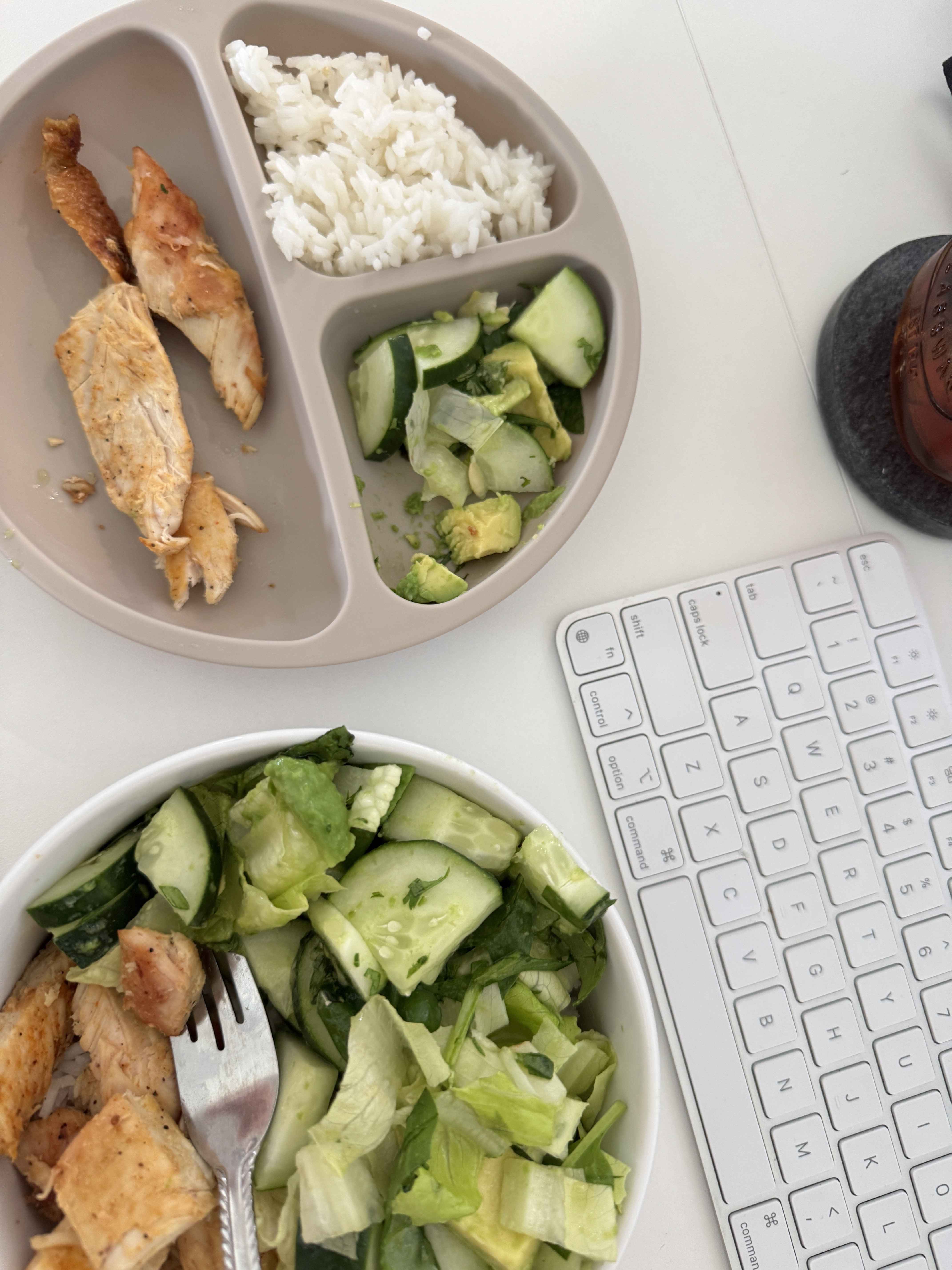
Rotisserie chicken plate: Rotisserie chicken + bagged salad + microwaveable grain or potato + dressing or avocado.
Tuna or salmon bowl: Tuna or salmon packet + microwaveable rice + frozen or pre-cut vegetables + avocado or dressing.
Cottage cheese plate: Cottage cheese + fruit + whole-grain toast or crackers + nuts.
Shortcut burrito bowl: Pre-cooked chicken + black beans + microwaveable rice + salsa + bagged lettuce + guacamole.
Mediterranean plate: Hummus + chicken or hard-boiled eggs + vegetables + whole-grain pita + olives.
High-protein snack plate: Hard-boiled eggs or turkey + cheese + vegetables + fruit + whole-grain crackers.
Frozen meal upgrade: Frozen entrée + extra frozen vegetables + additional protein if needed.
A meal does not have to resemble a recipe. Sometimes dinner is simply four useful foods on a plate. When energy is low, assembly beats cooking.
How Do You Choose a Healthy Frozen Meal?
Avoid rigid rules like "never buy anything with more than X milligrams of sodium." Instead, ask a few practical questions.
Is there meaningful protein? A frozen meal built around chicken, turkey, fish, beans, lentils, or tofu is more likely to satisfy you. A meal with minimal protein may leave you hungry within an hour.
Is there fiber? Meals containing vegetables, beans, whole grains, or lentils are more likely to slow digestion and extend satiety.
Is the portion large enough? A 250-calorie frozen entrée may not be enough food for most adults. Check whether it's a realistic portion or something that'll send you back to the kitchen 30 minutes later.
Can you upgrade it? If a frozen meal is convenient but incomplete, add something. Frozen pasta + chicken + broccoli. Frozen burrito bowl + Greek yogurt + extra vegetables. Frozen curry + edamame + side salad. This is more useful than expecting a single frozen entrée to be nutritionally complete.
On sodium: frozen and packaged meals can be higher in sodium, which matters for some people, particularly those with certain health conditions. A short-term scale increase after a salty meal is not automatically fat gain. It's mostly water retention.
You don't have to find the perfect frozen meal. Find a decent base and make it better.
What Should You Eat When You're Too Tired to Cook?
Sometimes the barrier isn't cooking. It's decision fatigue. You've made hundreds of decisions throughout the day, and "what should I eat?" suddenly feels like one too many.
Create two or three default meals. Choose meals you can execute with almost no thought.
Default breakfast: Greek yogurt + berries + nuts. Default lunch: Chicken + bagged salad + microwaveable rice. Default dinner: Eggs + frozen vegetables + toast.
The goal isn't culinary excitement. It's eliminating decision-making when your bandwidth is lowest.
Build an emergency shelf. Keep a small group of foods that can become dinner without planning: tuna packets, canned beans, microwaveable grains, soup, frozen vegetables, frozen protein, whole-grain crackers, nut butter. These don't expire quickly. You don't have to think about them.
Give yourself permission to eat a "good enough" meal. Dinner can be Greek yogurt, fruit, nuts, and toast. It doesn't need to look like a traditional dinner to count as a meal that supported your body.
Don't wait until you're ravenous. When possible, avoid reaching the point where you're exhausted, extremely hungry, and trying to make a decision simultaneously. That's the exact combination that makes the fastest, most rewarding food in the house win every time.
When decision-making is the problem, the solution isn't more nutrition knowledge. It's fewer decisions.
How Do Grab and Go Foods Affect Blood Sugar?
No individual food guarantees stable blood sugar. Glucose responses are influenced by meal composition, portion, sleep, stress, physical activity, meal timing, and individual physiology. But meal construction does matter.
Compare two convenience meals. Option A: crackers and sweetened coffee. Option B: Greek yogurt, berries, nuts, and whole-grain toast. Both are convenient. But the second contains more protein, fiber, fat, and food volume, which changes digestion, satiety, and the metabolic context around the carbohydrate.
The question isn't which carbohydrate to avoid. It's what to eat with it. Microwaveable rice eaten alongside chicken, beans, and vegetables is a different metabolic experience than rice eaten alone. Post-meal movement also helps: a short walk after eating can help skeletal muscle use glucose more efficiently, and this holds even after a quick convenience meal.
A CGM can show you how different convenient options actually land in your body. Which frozen meals produce more glucose variability? Does adding protein to your default breakfast change your energy an hour later? What happens after a no-cook dinner versus a takeout night? The goal isn't to identify "good" and "bad" foods. It's to understand which options work particularly well for your body and your real life.
The goal isn't to eliminate convenient carbohydrates. It's to build convenient meals that give those carbohydrates better company.
How to Build a Healthy No-Cook Grocery List
Instead of shopping for recipes, shop for components. Keep at least a few options from each category so you can always assemble something, regardless of what the week looks like.
Proteins (pick 2-3): Rotisserie chicken, Greek yogurt, eggs, tuna packets, cottage cheese, pre-cooked lentils, edamame.
Produce (pick 2-3): Frozen broccoli, berries, bagged salad greens, cherry tomatoes, frozen mixed vegetables, apples.
Fiber-rich carbohydrates (pick 2-3): Microwave rice or quinoa packets, oats, canned beans, whole-grain bread or crackers.
Fat and flavor (pick 1-2): Avocado, hummus, nuts, nut butter, olive-oil dressing.
Emergency meals (pick 2-3): Frozen entrée, canned soup, tuna packet + crackers + fruit, frozen burrito.
One behavioral principle worth keeping in mind: keep the easiest healthy foods visible, accessible, and ready to eat. Don't put the apple behind six ingredients that require prep while crackers sit on the counter. The foods that are easiest to grab are the foods you'll eat when your bandwidth is lowest.
Your food environment should make the choice you want to make the easiest choice available.
Topics discussed in this article:
References