
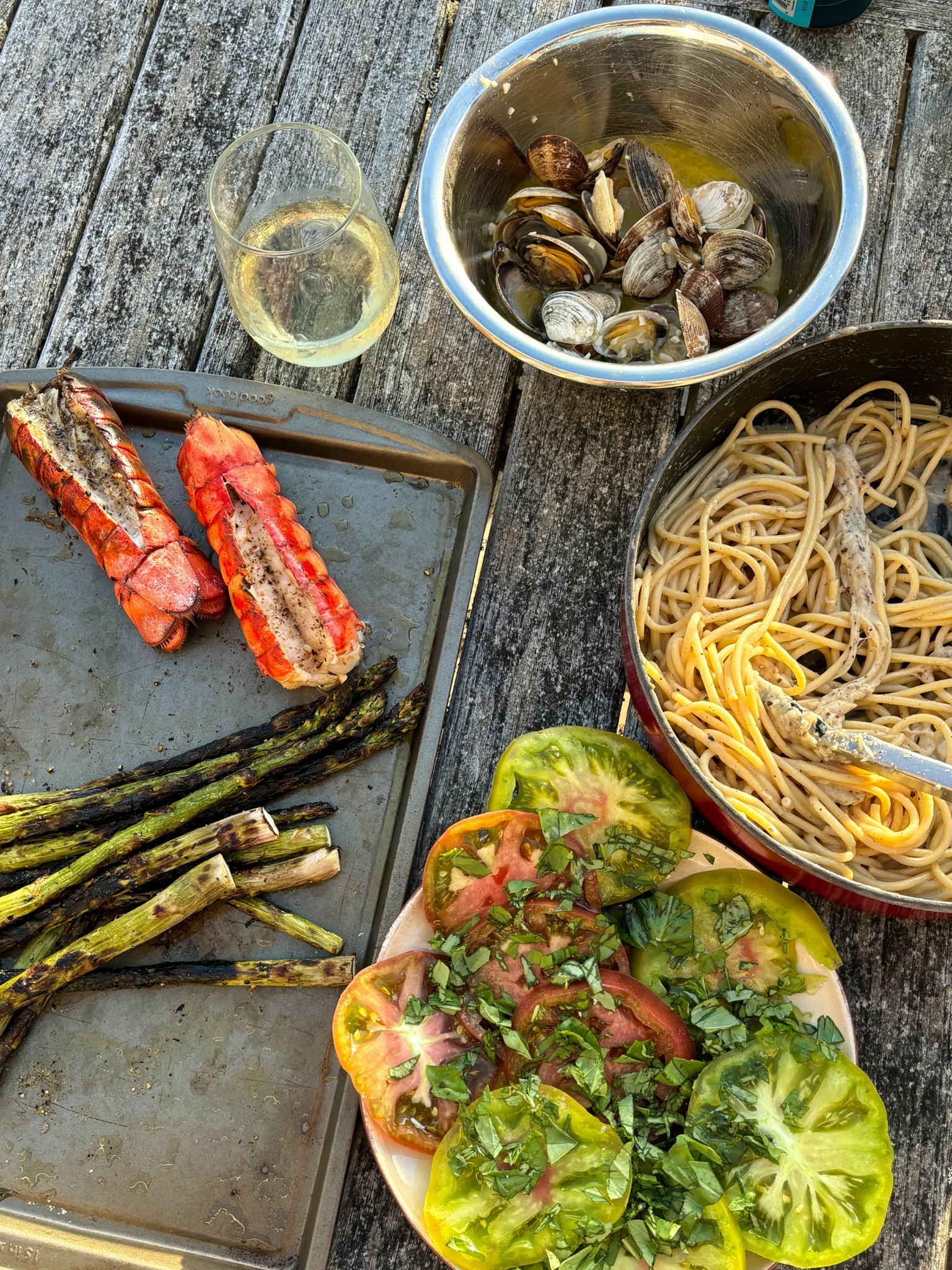
From Memorial Day to the Fourth of July to Labor Day, the cookout plate barely changes. Same burgers, same beans, same watermelon, same cooler of beer. What changes, if you're watching your blood sugar, is knowing what to pile on and what to go easy on.
So we ranked the plate. Signos measures how food actually affects glucose, using data logged by thousands of members wearing a continuous glucose monitor, and it turns out the cookout has a clear cast of heroes and a few sneaky spikers hiding in plain sight. The good news for anyone managing blood sugar at a barbecue: the grill itself is on your side. The thing you're cooking is usually the steadiest item on the table.
A couple of results will surprise you. Watermelon has a worse reputation than it deserves, and there's a one-ingredient trick that makes it better. The baked beans are quietly worse than they look. Here's the whole plate, measured, plus how to build a cookout plate that treats you well at any grilling weekend you show up to.
How We Measured This
Every figure here comes from the Signos Food Atlas, our library of foods scored by real glucose response. Each number is an average glucose peak in mg/dL, drawn from members' logged meals and measured by CGM, so you're seeing what happened to actual people, not a label estimate.
Alongside the peak we track glycemic index and glycemic load (the textbook fast-and-how-much scores), the spike rate (how often a food crossed a meaningful climb), and the sample size. Some of these foods were logged thousands of times, which is why the surprises below hold up rather than reading as noise. It also means we can compare a burger to a bun to a scoop of beans on the same measured footing, instead of guessing from the labels.
The Grill Heroes (Lowest Spike)
Start with the best news. Whatever you're searing over the coals, a rib-eye, burger patties, chicken on the grate, is almost certainly a food that doesn't spike blood sugar much at all.
Steak barely registered. On average, steak barely moved glucose (+24.9 mg/dL), with a glycemic index of 0, across more than 7,000 logs. Pure protein and fat, nothing fast to climb on. The one catch: order steak with a side of fries and the combined meal jumped to +44.7, which tells you where the spike really comes from.
The burger patty is the same story. On its own, the burger patty itself is GI 0 and came in at +23.8 mg/dL. Add the bun and it climbed to +38.8, a jump of about 11 points from the bread alone.
The pattern is worth holding onto for the whole cookout: the protein you grill is, metabolically speaking, close to free. A glycemic index of 0 means there's no fast carb to climb on, and the fat and protein actually slow down whatever you eat alongside them. The spike is almost never the main. It's what's next to it.
The Sneaky Spikers (Watch the Sides)
Which brings us to the sides, where the real action is. These are the foods that quietly do the spiking while the burger gets the blame.
The hamburger bun is the classic example. By itself, the bun is the real spike at +40.0 mg/dL, GI 61, with 62.6% of logs crossing +30. Soft white bread, very little to slow it down. Eating it with a solid dose of protein pulled the peak down about 13%.
Baked beans are the one thing people don't see coming. You'd think beans, high fiber, plant protein, would be a steady choice. But the classic cookout version came in at +41.2 mg/dL, higher than the bun. The reason is why baked beans spike more than plain beans: the brown-sugar-and-tomato sauce. Plain beans logged at +32.2, so the roughly 9-point difference is the sauce, not the bean.
Then the potatoes. French fries topped +44.6 mg/dL, the biggest spike in the whole Atlas fast-food set, and the chips bowl runs on the same fast-starch logic. Fries and chips are the two sides most worth keeping small.
Why does the side beat the main so consistently? Because the main is protein and fat, and the sides are fast, refined starch. A bun, a scoop of sweet beans, a handful of chips: these break down quickly into sugar with little fiber or fat to slow them, so they hit your bloodstream in a hurry. The steak or the burger sitting next to them does the opposite. If you only remember one thing at the grill, remember that the plate's spike lives in the beige stuff, not the browned stuff.
Is Watermelon Bad for Your Blood Sugar?
Here's the surprise everyone asks about. Watermelon has a scary glycemic index of 72, which is why it gets side-eye at every summer table. But glycemic index only tells you how fast, not how much, and watermelon's glycemic load is just 4. It's mostly water.
The measured result splits the difference. Is watermelon bad for blood sugar? Across more than 3,000 logs it peaked at +36.8 mg/dL, real but not extreme, with 56.7% of servings crossing +30. So the low glycemic load doesn't make it a free pass, and the scary glycemic index doesn't make it a villain. The real answer lands in the middle, and where it lands for you depends a lot on how you eat it.
And there's a genuinely useful trick. A pinch of salt on the watermelon dropped the peak by about 15 mg/dL, measured across 563 logs, which makes it one of the more confident modifiers in the whole set. Salt on melon is an old trick that happens to have a metabolic payoff, probably because the sodium slows how fast the fruit sugar moves. So watermelon stays on the plate. Salt it, eat it after your protein rather than on an empty stomach, and a slice or two behaves far better than its reputation.
Drinks: Beer vs. Wine vs. the Rest
The cooler deserves a quick word, because the two most common cookout drinks are not equal. Beer averaged +38.2 mg/dL. A glass of dry wine came in much lower at +28.7, and its glycemic index is technically 0, meaning any spike you see with wine is really the meal it's next to, not the wine itself.
If you're pacing yourself at a barbecue, dry wine or a light beer (which logged lower than regular) are the steadier pours. The sweet tea on the drinks table spikes harder than either, so that's the one to sip slowly. Water between rounds does more than any swap. We go deeper on every drink in a separate roundup, but for a cookout, that's the short version.
Build Your Low-Spike Cookout Plate
- Put it all together and a genuinely good plate almost designs itself. You're not cutting things out. You're changing the ratios.
- Anchor the plate with the grill. Steak, a burger patty, grilled chicken: these are your steadiest calories, so let them take up the most room. Load up here without much worry.
- Be deliberate with the two-bun problem and the beans. You don't have to skip the bun, but eating it with your protein (not as a lone carb) softens it, and half a bun is half the load. With baked beans, know that the sweetness is the spiker, so a smaller scoop goes a long way, or reach for a plainer bean side if there's one out.
- Keep the fast-starch sides small. Fries are the biggest mover on the table, and chips run on the same fast-starch logic, so a small portion next to a big pile of protein is a very different plate than a mountain of chips with a burger on the side.
- Salt the watermelon, and save it for after you've eaten some protein. Fruit lands more gently on a stomach that isn't empty, which is the same reason the best fruits for diabetics are usually the ones eaten with a meal rather than alone.
- Take a walk after you eat. A short one after the plate is a reliable way to lower any post-meal peak, cookout or not.
Here's what that looks like on an actual plate:
- A grilled burger patty or a few slices of steak takes up half
- A small scoop of baked beans, not a trough, sits next to it
- Instead of a big pile of chips and a full bun, you take half a bun or skip the top, and a modest handful of chips rather than the bowl
- A salted wedge of watermelon comes after, not first
Nothing on that plate is off-limits, and none of it is the sad "diet" version. It's the same cookout, arranged so the grill does the heavy lifting and the fast carbs play a supporting role.
The Bottom Line, and How to See Your Own Cookout Response
The rankings here are averages across thousands of Signos members, and they hold at any cookout, any month: the grilled protein is the steady part, and the bun, the beans, the chips and the fries are where the spikes hide. Build around that and you can eat well at any summer table, whether it's Memorial Day, the Fourth, a Labor Day send-off or a random Saturday with the grill going. The plate barely changes from one to the next, and neither does the playbook.
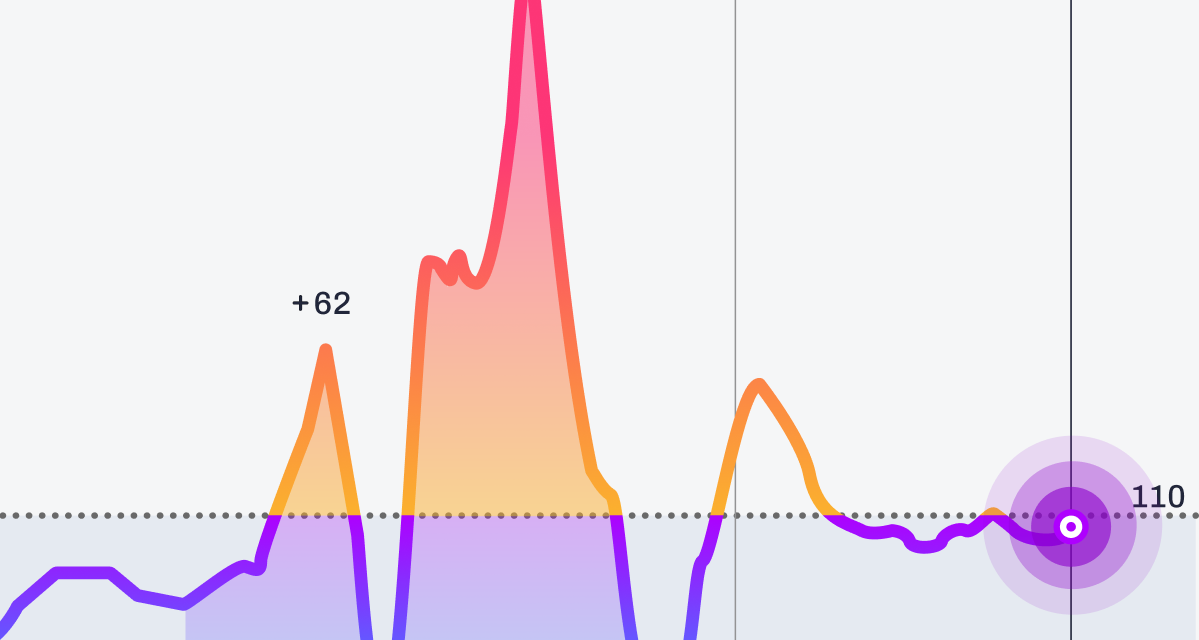
Your plate, though, is yours. Your watermelon, your beer, your body will land on their own numbers, and that's the ranking that actually matters for your afternoon. A continuous glucose monitor shows you that in real time. If you want to know what your cookout does to your glucose, you can see how Signos works and read your own plate instead of a chart.
Curious about a specific dish? Every food above has its own page in the full Signos Food Atlas, with the peaks, sample sizes and pairing tips in full.
FAQ
Is watermelon bad for diabetics? Not as bad as its glycemic index suggests. Watermelon's GI is 72, but its glycemic load is only 4 because it's mostly water. In Signos data it peaked at +36.8 mg/dL on average, and a pinch of salt lowered that by about 15 mg/dL. Eaten with a meal and salted, it's a reasonable cookout choice for many people watching their blood sugar.
What cookout foods spike blood sugar the most? In our data, the sides do the spiking, not the grilled main. French fries (+44.6 mg/dL) and baked beans (+41.2) topped the list, with the hamburger bun close behind (+40.0). The steak and burger patty, by contrast, barely moved glucose.
What can a diabetic eat at a cookout? Plenty. Lead with the grilled protein (steak, burger patty, chicken), keep the fast-starch sides like fries and chips small, go easy on sweet baked beans, salt the watermelon, and take a walk afterward. Because responses are personal, a CGM is the most direct way to see which cookout foods work for you.
Topics discussed in this article:
References

.svg)

.jpg)

.webp)