

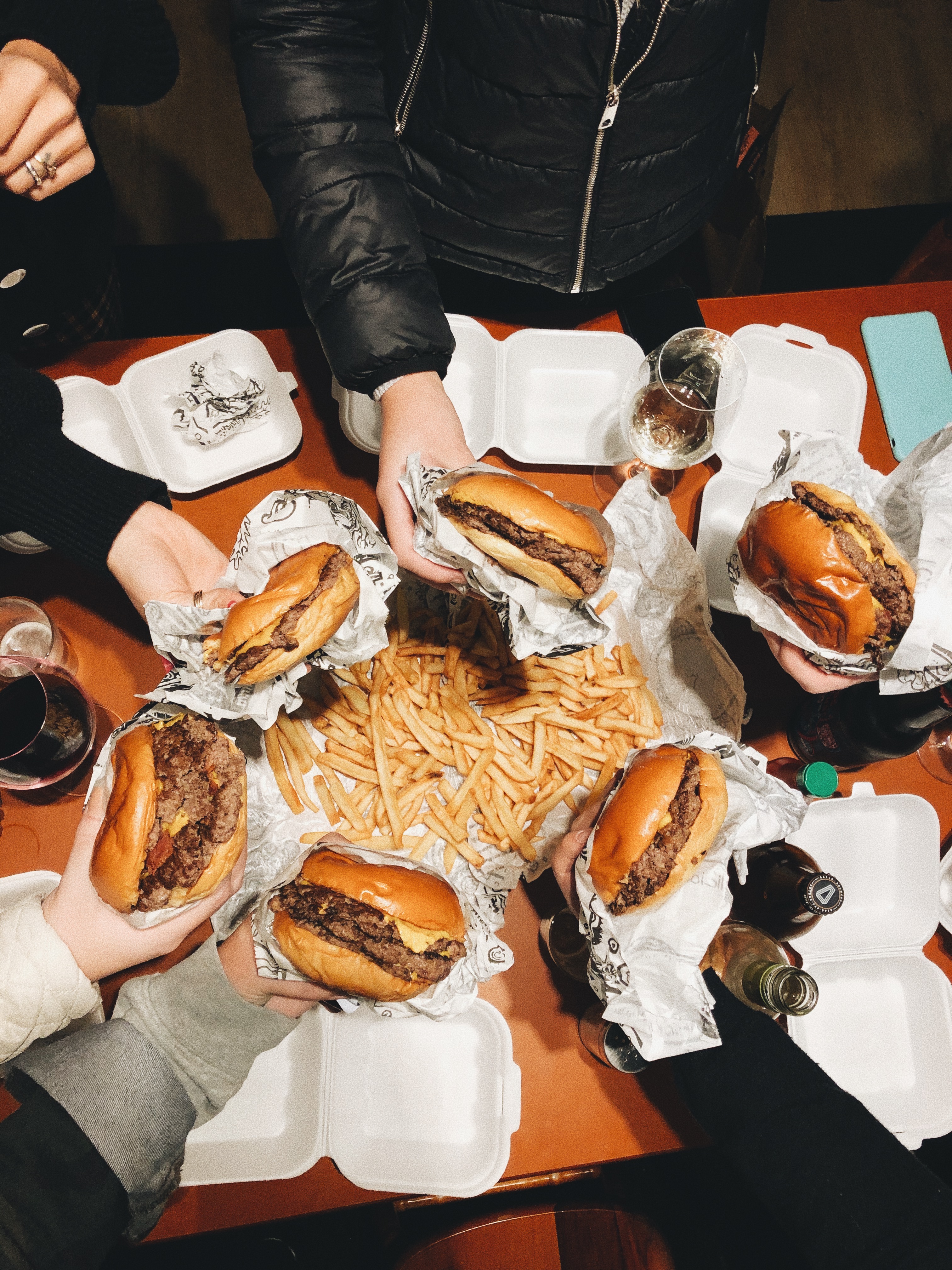
You'd assume fried chicken is the "worst" order, and a glazed donut is the little treat you can get away with. The data says it's the other way around.
Signos measures what food actually does to real people's glucose. Not the number on a label, not a textbook estimate, but the average spike logged by thousands of members wearing a continuous glucose monitor. When you sort drive-thru classics that way, the ranking stops matching the usual advice about the healthiest fast food, and a few of the results are genuinely surprising.
So if you're figuring out fast food for diabetics, for prediabetes, or just for keeping your energy steady through the afternoon, this is the honest version. We took five drive-thru staples and ranked them worst to best by their measured glucose peak. Then, because skipping the drive-thru forever isn't a real plan, we pulled the small ordering changes that lowered each spike. Here's the full ranking.
How We Ranked These (The Data Behind Atlas)
Every number here comes from the Signos Food Atlas, our library of foods scored by real glucose response. Each food page is built from members' logged meals, so the figure you see is an average of what happened to actual people after they ate the thing, measured by CGM.
For each item, we looked at four things. The average glucose peak in mg/dL, which is how high blood sugar climbed above baseline. The glycemic index and glycemic load, the textbook scores, so you can see where the measured result agrees with theory and where it doesn't. The spike rate, meaning the share of logs that crossed a meaningful threshold. And the sample size, because "we measured this across 9,134 donuts," should carry more weight than a guess.
One quick note on the two textbook scores, since they explain a lot of the surprises below. Glycemic index rates how fast a food raises blood sugar. Glycemic load adjusts for how much of that food you actually eat in a serving. A food can score high on one and low on the other, which is exactly why a couple of these rankings don't go the way you'd predict.
The reason we lead with measured peaks instead of those textbook scores is simple. Glycemic index is a lab average from a small group of people eating a food in isolation. Real fast food shows up salted, fried, portioned large and eaten next to other things, and it lands in bodies that all handle it a little differently. The Atlas numbers capture that mess, because they come from real meals in real life, which is why they occasionally disagree with the textbook and, on this list, why they're more useful.
The Ranking: Worst to Best
Here's how the five classics landed, from the biggest average spike to the smallest:
- French fries — +44.6 mg/dL
- Glazed donut — +43.0 mg/dL
- Tater tots — +40.5 mg/dL
- Hamburger bun — +40.0 mg/dL
- Fried chicken — +37.5 mg/dL
Notice the shape of that list. The fried, protein-heavy item finished lowest, while the soft carbs and the potatoes crowded the top. That's the whole story of this ranking in a single line, and it runs against almost every "healthiest fast food" roundup you've read. Here's each item in detail, with the number, the reason behind it, and one way to order it better.
French Fries: The Worst Offender
Fries earned the top spot the hard way. On average, french fries spiked glucose +44.6 mg/dL, with a glycemic index of 75 and a glycemic load of 35, and 70.8% of logged servings pushed past a +30 climb. That's not a fluke of a small dataset either.
The reason is straightforward. A fry is a fast carb fried in fat and salted, eaten by the handful, usually as a side to something else that's also raising your glucose. The load does the damage.
You don't have to give them up. Timing helped more than people expect: fries eaten before 10 am came in about 19% lower, when insulin sensitivity tends to run higher. Splitting a large into a small, or sharing the order, does the rest.
Glazed Donut: The Treat That Hits Like One
The donut ranked second at +43.0 mg/dL, which won't shock anyone. What's worth seeing is the texture of it: a glycemic index of 76, a glycemic load of 20, and 68% of logs over +30, what a donut does to your blood sugar measured across 9,134 servings. Refined flour and sugar with very little fiber, protein or fat to slow it down. It goes in fast and it climbs fast.
The gentlest fix is not to eat it alone on an empty stomach. Pairing it with coffee shaved a few points off the peak (about 4 mg/dL), and following it with a walk does more.
Tater Tots: The Potato Problem, Again
Tater tots landed at +40.5 mg/dL, GI 70, glycemic load 18. If you're seeing a pattern with potatoes, you're right to. The tater tots glucose response looks a lot like the fries: a starchy, fried carb that climbs quickly.
The move that helped here was pairing. Tots alongside eggs and bacon, rather than as a solo carb, came in about 7.6 mg/dL lower. Protein and fat next to the starch flatten the curve.
Hamburger Bun: The Sneaky One
This is the result most people miss. The patty isn't the problem in a burger. The bun is. On its own, the hamburger bun is the real spiker at +40.0 mg/dL, GI 61, glycemic load 9, with 62.6% of logs over +30. The beef inside barely moves glucose at all. The soft white bread around it does most of the lifting.
Adding protein blunted it: a bun eaten with about 15 grams of protein came in 13.4% lower. Which is a fancy way of saying eat the burger, and consider whether you need the whole top bun.
Fried Chicken: The Surprise At the Bottom
Here's the payoff. Fried chicken had the lowest average spike of the five, fried chicken's surprisingly low glucose peak sitting at +37.5 mg/dL, GI 50, glycemic load 12, with 58.6% of logs over +30. The most "indulgent"-sounding item on the list was the steadiest.
If you order it, the cut matters. Wings came in about 12.9 mg/dL lower than a drumstick, likely a batter-to-meat ratio thing. More meat, less breading, lower peak.
Why Fried Chicken Beat the Donut
This is the part worth screenshotting. A crispy piece of fried chicken spiked less than a donut and less than a plate of fries, and it isn't a data quirk. It's how digestion works.
Fat and protein slow down how fast your stomach empties. When a meal is mostly protein and fat, the carbs that ride along get released into your bloodstream gradually, so the glucose curve is lower and later. Fried chicken has real protein under that batter, and plenty of fat, so even with the breading it comes in flatter than you'd guess.
Refined carbs do the opposite. A donut and a serving of fries are mostly fast starch and sugar with almost nothing to put the brakes on. They empty quickly and hit your bloodstream in a hurry. Glycemic load is the tell: fries carry a load of 35, well above the donut's 20 and nearly triple the fried chicken's 12. The bigger the fast-carb load, the bigger the climb.
None of this makes fried chicken a health food. It's a reminder that "how much will this spike me" and "how greasy does this feel" are two different questions, and your glucose only cares about the first one. The takeaway isn't "eat more fried chicken." It's that the intuition telling you the sweet, soft, refined thing is the gentler choice is often backwards, and the numbers are a better guide than the guilt.
How to Order Fast Food Without the Spike
The theme across all five items is the same. You rarely need to skip the thing. You need to change how it shows up on the tray.
Lead with protein. A bunless burger, grilled or fried chicken, or eating the protein part of your meal first gives your glucose something to lean against before the fast carbs arrive. Protein next to a bun pulled the spike down more than 13%.
Watch the timing. Your body handles carbs better earlier in the day, and that morning-fries result (about 19% lower before 10 am) is a clean example. A carb-heavy lunch will usually treat you better than the same thing at 9 pm.
Shrink the load, not the joy. The load is what climbs, so a small fry instead of a large, or splitting the order, changes the number without changing whether you got fries. Same logic on the second half of a bun or a side you weren't going to finish anyway.
Move a little after. A short walk after eating is a reliable way to lower a post-meal peak, whatever you ordered. Ten minutes on your feet does real work here.
Put those together on a real order and it's not much of a sacrifice. A fried chicken sandwich, eaten with half the bun and a small fry instead of a large, at lunch rather than late at night, followed by a short walk, is a genuinely different glucose event than the same food ordered on autopilot. You still had the drive-thru. You just changed the parts that were doing the spiking.
The Bottom Line, and How to See Your Own Response
The rankings here are averages across thousands of Signos members, and they're useful for the same reason all good averages are: they point you in the right direction. Order more protein, respect the load, and the fried thing often treats you better than the sweet one.
But an average isn't you. Your fries, your morning, your body will produce their own number, and that's the only ranking that matters for your day. That's what a continuous glucose monitor shows you: your actual response to your actual order, in real time. If you're curious what the drive-thru does to your glucose, you can see how Signos works and start reading your own data instead of a chart.
Want to go deeper on any single item? Every food above has its own page in the full Signos Food Atlas, with the peaks, the sample sizes and the ordering tips laid out in full.
FAQ
Does fast food spike blood sugar? It can, but how much depends far more on what you order than on the fact that it's fast food. In Signos data, the biggest spikes came from fast carbs like french fries (+44.6 mg/dL) and donuts (+43.0), while a protein-heavy item like fried chicken came in lower (+37.5). The load of fast carbs is what drives the climb.
What's the healthiest fast food for blood sugar? By measured glucose response, the protein-forward, lower-carb options tend to spike the least. Among the classics we ranked, fried chicken had the lowest average peak, and a burger without the bun follows the same logic. The bun and the fries, not the meat, do most of the spiking.
Is fast food OK if I'm managing blood sugar? Plenty of people managing blood sugar still eat fast food. The practical moves are to lead with protein, keep the fast-carb portion small, and move a little afterward. Because responses are personal, wearing a CGM is the most direct way to learn which orders work for you.
Topics discussed in this article:
References

.svg)





.jpg)